Overhead Crane Training

Course Duration : 1 Day (9am – 5pm)
Target Group : Overhead Crane Operators seeking to obtain or renew their certificate
100% HRDF Claimable
Assessments : Written & Practical Tests
Certified Overhead Crane Training
Overhead Crane Training Malaysia – Get Certified Today!
Overhead Crane Training Course Overview
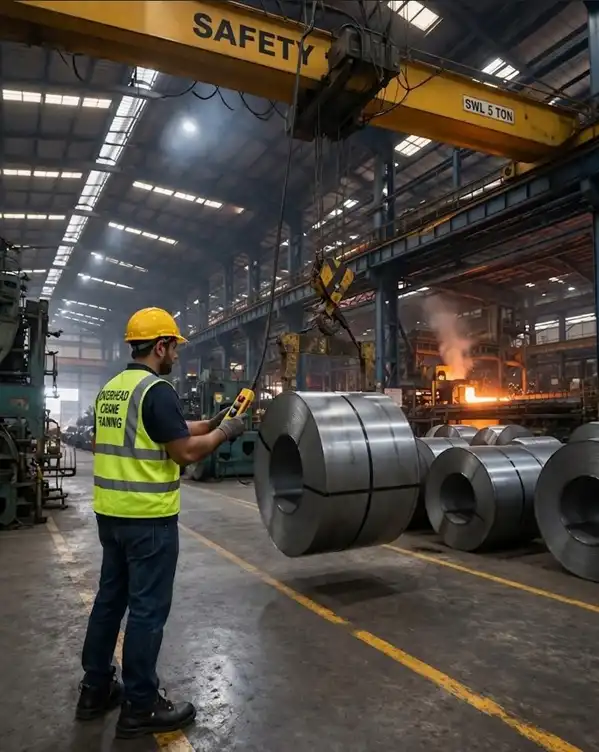
This competency-based overhead crane training program equips operators with the skills to handle lifting equipment safely in compliance with the Occupational Safety and Health Act 1994 and the Factories and Machinery Act 1967.
This overhead crane training program equips operators to safely handle overhead lifting equipment.
The course primarily aims to eliminate unsafe practices and bad habits, thereby reducing equipment damage and workplace injuries.
Key areas of instruction include:
Understanding Knowledge
Understanding the legal roles and responsibilities of both employers and employees.
Learning Technical Skills
Learning the physics of cranes, crane components, and terminology.
Rigging and Loads
Mastering different hitching methods (such as basket and choker hitches) and calculating safety loads and slinging angles.
Safety Procedures
Performing pre & post operational checks, understanding limit switches, and using internationally recognized hand signals.
Validity of Certificate for Overhead Crane Training
The crane safety certification methodology involves interactive theory sessions followed by hands-on practical sessions held at the client’s premises. Finally, the instructor evaluates participants through both written and practical tests,.
We award successful participants with a Certificate of Training and a Course Completion Card, both valid for 3 years.

Training Venue
 Pulau Indah, Selangor
Lot 81, Jalan Perigi Nanas 8/11, Taman Perindustrian Pulau Indah
42920 Pulau Indah, Selangor
Training Date
 1 Day 9am – 5pm
 August
05 Aug 2026 (Wednesday)
Or
August
27 Aug 2026 (Thursday)
Important Info
 100% HRDF Claimable
 OSHA Act & Machinery Act Compliance
 3 Years Cert Validity
If you are interested, Call Us at 010 – 669 8760 to Book Your Training! Or fill up the form as below:-
Do Advance Rescue Academy conduct crane safety certification in KL & Selangor? or all location in Malaysia?
Yes, we provide overhead crane training for all location in Malaysia like Kuala Lumpur (KL), Kepong, Cheras, Ampang, Putrajaya
Selangor – Petaling Jaya, Subang Jaya, Subang, Shah Alam, Puchong, Port Klang, Klang, Seri Kembangan, Serdang, Cyberjaya, Pulau Indah, Bestari Jaya, Setia Alam, Kajang, Hulu Langat, Kuala Langat, Bangi, Balakong, Semenyih, Banting, Gombak, Selayang, Batu Caves, Sungai Buloh, Rawang, Damansara, Ara Damansara, Kota Damansara, Bandar Utama, Sungai Besi, Sepang, Telok Panglima Garang, Jenjarom, Dengkil, Ijok, Jeram, Hulu Selangor, Kuala Selangor, Salak Tinggi, KLIA, Kota Kemuning, Sabak Bernam, Sungai Besar, Sekinchan, Kuala Kubu Baru, Batang Kali, Serendah, Rasa
Johor – Ulu Tiram, Johor Bahru, Gelang Patah, Pasir Gudang, Kulai, Skudai, Johor Jaya, Tampoi, Tebrau, Permas Jaya, Masai, Plentong, Senai, Kempas, Mount Austin, Taman Molek, Iskandar Puteri, Pengerang, Sedenak, Pontian, Pekan Nanas, Kota Tinggi, Kluang, Simpang Renggam, Batu Pahat, Yong Peng, Ayer Hitam, Muar, Pagoh, Paloh, Segamat, Jementah
Negeri Sembilan – Seremban, Senawang, Nilai, Rasah, Ampangan, Sikamat, Pajam, Labu, Port Dickson, Lukut, Bahau, Linggi, Rembau, Gemas, Kuala Pilah, Rompin, Bandar Seri Jempol, Mantin
Perak – Ipoh, Pasir Puteh, Menglembu, Chemor, Tasek, Tambun, Jelapang, Lahat, Simpang Pulai, Batu Gajah, Pusing, Siputeh, Tronoh, Kampar, Gopeng, Taiping, Kamunting, Simpang, Seri Manjung, Lumut, Sitiawan, Teluk Intan, Hutan Melintang, Tanjung Malim, Kangsar, Parit, Parit Buntar, Nibong Tebal, Bagan Serai, Gerik, Lenggong
Pahang – Kuantan, Indera Mahkota, Gebeng, Pekan, Karak, Raub, Temerloh, Mentakab, Lanchang, Jerantut, Kuala Lipis, Bentong, Endau, Kuala Rompin, Tanah Rata, Cameron Highland, Muadzam Shah, Brinchang
Melaka – Ayer Keroh, Batu Berendam, Alor Gajah, Taman Cheng, Jasin, Merlimau, Masjid Tanah
& other states like Penang, Kedah, Perlis, Sabah, Sarawak, Labuan
Meet Our Support Team
Team Leader – Trainer Mr Beram
Working Background
Former HSE Manager for a large multinational manufacturing company in Selangor (Master in Health, Safety & Environmental – Universiti Malaysia Pahang)
Mr. Beram is a registered SHO and a SIRIM-certified ISO 45001:2018 Internal Auditor, enabling him to deliver compliance training at the highest professional standard while understanding the operational challenges of a factory environment. Furthermore, as an accredited HRD Corp Trainer, he is capable of training participants at all organizational levels, ranging from general workers to senior management. Moreover, industry peers recognize Mr. Beram as a “Safety Strategist with an Engineer’s Mind”. He not only teaches safety regulations and compliance requirements but also applies a deep understanding of machinery, management systems, and regulatory frameworks to ensure modern industrial facilities operate safely and efficiently
Our List of Clients
FAQ of overhead crane safety training
Q : What is overhead crane training in Malaysia?
According to Factories & Machinery (Person-in-Charge) (Amendment Regulations 2014), under Substitution of regulation 20, Company shall provide adequate training & supervision to operators of machine set out, for instances, Overhead Crane Training.
Overhead Crane Safety Handling Training in Malaysia is a structured program to train the operators master the crane operations safely. Throughout the course, workers learn to operate, signal, and inspect equipment within factories, warehouses, and construction sites.
Q : What is overhead crane operators in Malaysia?
In Malaysia, the overhead crane operators shall be trained & certified to operate the overhead crane. The training aligns with the Occupational Safety and Health Act 1994 and DOSH guidelines. Specifically, these regulations mandate that employers ensure all crane operators are competent, well-trained, and capable of safe equipment operation.
Keypoints:
Safety awareness
Common crane hazards include load swing, collision risks, and falling loads, while accident prevention in lifting operations focuses on proper control measures and safe working practices, supported by adherence to workplace safety rules and the correct use of personal protective equipment (PPE).
Crane operation knowledge
The training teaches participants basic crane controls and functions to ensure they manage equipment movement safely. Through hands-on practice, the instructor reinforces safe lifting, lowering, and movement techniques to maintain controlled and stable operations. We also introduce load calculations and safety load estimations so operators can keep the crane within its safe working limits
Rigging and load handling
Focus on slinging methods, load weight estimation, and the proper use of hooks, slings, and attachments as the core of safe load handling practices, so that each lift is correctly rigged, accurately assessed for weight, and securely connected to prevent accidents during crane operations.
Inspection & maintenance awareness
Pre-use inspection checklists and the ability to identify defects, followed by proper reporting procedures, are essential components of safe crane operation, ensuring that any issues are detected early and addressed before the equipment is used.
Communication & signaling
Standard hand signals and clear communication between the crane operator and the rigger or banksman are essential for ensuring safe coordination during lifting operations, helping to prevent misunderstandings and maintain full control of the load at all times.
Emergency procedures
What to do in case of equipment failure & Safe shutdown procedures
Q : Is overhead crane training required in Malaysia?
Yes, overhead crane training is effectively required in Malaysia to ensure operators are trained and competent to operate safely.
Here’s the clear legal and practical situation:
Legal requirement (core principle)
The Occupational Safety and Health Act 1994 requires employers to provide a safe workplace, ensure employees are properly trained, and control machinery and lifting risks. As a result, allowing an untrained worker to operate an overhead crane may lead to non-compliance, penalties, or legal action against the employer.
DOSH expectation (enforcement reality)
The Department of Occupational Safety and Health expects crane operators to be properly trained and competent, with employers maintaining clear operating procedures and training records for inspection or investigation. During audits or accident investigations, DOSH typically asks: “Who trained the operator?” and “Is there documented evidence of competency?”
Important distinction: “license” vs “training”
For overhead cranes:
❌ No government-issued license required
✅ Training + competency certification is required
However, for higher-risk cranes like:
Mobile cranes
Tower cranes
👉 Those may require formal licensing under specific regulations.
Why companies still must do it
Even without a specific “license law,” crane training is effectively mandatory as it helps reduce accidents and legal liability risks, is commonly required during safety audits, is often expected by clients—particularly factories and multinational companies—and also serves to protect employers from potential prosecution in the event of an incident.
Contact us